
Empowered Through Movement By Lois Alexander
A Biopsychosocial Approach to Feeling Good During Pregnancy & Postpartum
Pregnancy and postpartum are times of incredible change. Along with the physical changes happening in the body, there are also emotional, psychological, and social changes that shape how we feel and move each day.
Approaching movement from a biopsychosocial perspective creates a more holistic understanding of health, recognizing that our bodies, minds, and environments are deeply connected.
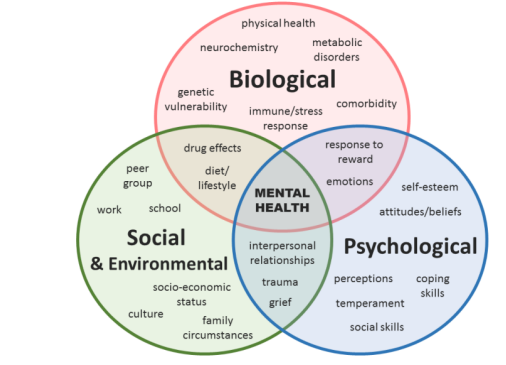
The biopsychosocial model recognizes that health is influenced by three
interconnected areas:
• Biological – the physical changes occurring in the body, such as hormones,
breathing, posture, and muscle function.
• Psychological – our thoughts, emotions, stress levels, and mental wellbeing.
• Social – our relationships, support systems, daily environment, and community.
These three areas constantly influence one another. Pilates provides an opportunity to
support each of them through mindful movement, breathing, and body awareness.
Rather than focusing on "getting your body back," movement can become a way to
build confidence, reduce tension, and feel more connected to yourself and your baby.
Every pregnancy is different, so listen to your body, move within your comfort level, and
enjoy the process.
The Whole-Body Core
The core is more than just the abdominal muscles. During pregnancy and postpartum, the body works as one connected system. The stomach muscles stretch to make room for growing baby, and the pelvis tilts forward.
Working with these changes by incorporating the concept of whole-body core and the deep front line can leave us feeling more empowered.
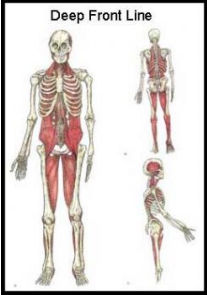
The Deep Front Line is a chain of muscles and fascia that runs from the soles of the feet through the inner legs, pelvic floor, diaphragm, deep abdominals, rib cage, neck, and jaw. Pilates encourages these structures to work together, creating efficient movement, improved posture, and better body awareness.
Everyday Movement
The benefits of Pilates extend beyond the studio. Small movement habits throughout
the day can make a meaningful difference.
Try to:
• Breathe before lifting, or getting up from the chair or car.
• Bend your knees, and hinge from hips when picking something up from the floor.
• Notice how your feet connect with the ground while standing.
• Reach overhead after long periods of sitting.
• Take regular walking breaks.
• Drink water throughout the day.
• Be patient with your body—it is adapting every day.
Exercises
The following eight exercises introduce some of the key movement principles used in
perinatal Pilates. Together, they encourage balance, breathing, whole-body strength,
and confidence, while supporting the physical, psychological, and social aspects of
wellbeing discussed above.
1. Hug the Baby (All Fours)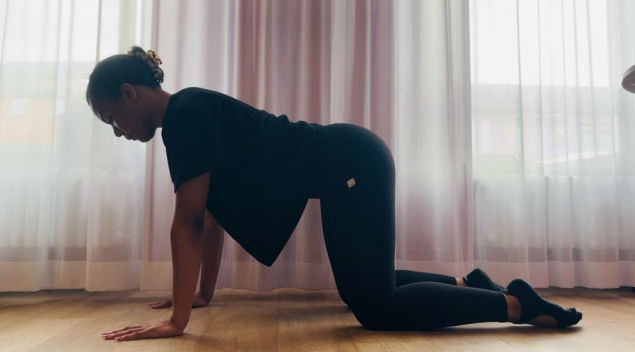
Purpose
This exercise combines lateral thoracic breathing with gentle core support. It
encourages rib cage expansion, postural awareness, and coordinated breathing while
helping you connect with your changing body.
How
• Begin on hands and knees with wrists under shoulders and knees under hips.
• Inhale into the sides and back of the rib cage.
• As you exhale, gently "Hug the Baby" by drawing the baby inward and slightly
upward without gripping the abdomen.
• Keep the shoulders and neck relaxed.
• Continue for 5–8 slow breaths.
Everyday Movement
Use this breathing pattern before lifting, standing up from a chair, or carrying
groceries.
2. Bird Dog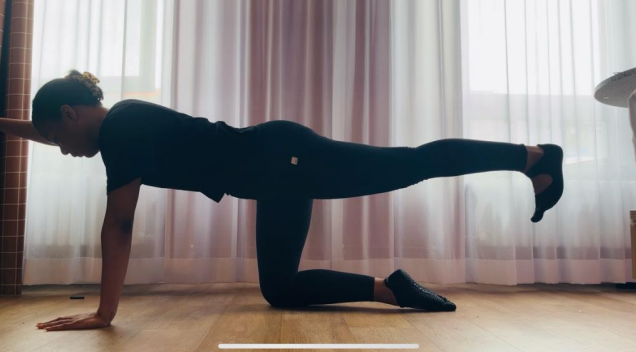
Purpose
Bird Dog improves balance, trunk stability, and coordination while strengthening the
connection between the back, glutes, and core.
How
• Begin on hands and knees.
• Inhale to prepare.
• Exhale as you reach one arm forward and the opposite leg behind you.
• Return with control and repeat on the opposite side.
• Continue for 6–8 repetitions on each side.
Everyday Movement
This exercise supports everyday activities such as reaching, carrying, and maintaining
balance.
3. Standing Footwork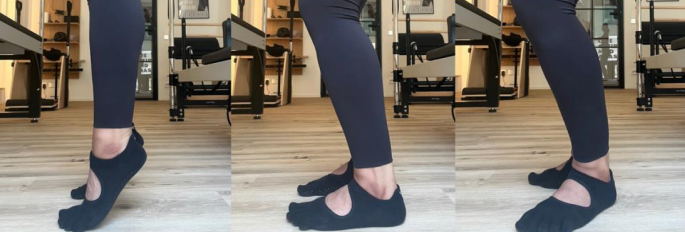
Purpose
Standing Footwork develops foot awareness, lower-body strength, and balance.
Repeating the movement rhythmically can gently elevate the heart rate while
encouraging circulation and coordination.
How
• Start in standing: parallel, heels lifted, Pilates V, or a wide externally rotated
(Pilates V) stance.
• Bend and straighten the knees 8–10 times in each position.
• Keep even pressure through the heels, big toes, and little toes.
• Maintain relaxed breathing throughout.
• Variations: calf raises, running through the balls of the feet in parallel, gentle
pulses and pauses.
Everyday Movement
Notice how your feet connect with the ground when walking, climbing stairs, or standing
for longer periods.
4. Gentle Hanging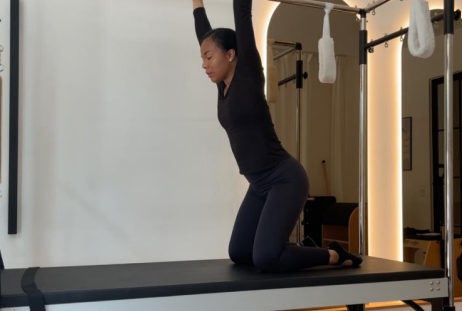
Purpose
Gentle Hanging creates space through the torso, encourages rib mobility, spinal
decompression, and promotes length through the spine.
How
• Reach overhead using a wall, doorframe, or another stable support.
• Can be kneeling, sitting on a box, or standing.
• Allow the ribs to expand as you breathe.
• Keep the shoulders relaxed.
• Hold for 3–5 slow breaths.
Everyday Movement
Reach overhead after sitting for long periods or whenever your upper body feels stiff.
5. Blooming Flower
Purpose
Blooming Flower encourages mobility through the shoulders, rib cage, and spine while
introducing movement in multiple directions.
How
• Begin sitting or standing comfortably.
• Wrap the arms around the shoulders.
• Gently lift the shoulders, bring the arms overhead.
• Allow shoulders to drop down.
• Open the arms wide and allow the shoulders to relax as the arms lower.
• Optional: add gentle side bends and rotation.
• Repeat 5–8 times.
Everyday Movement
Use this movement to gently loosen the upper body after working at a desk or
performing repetitive tasks.
6. Stretch Squat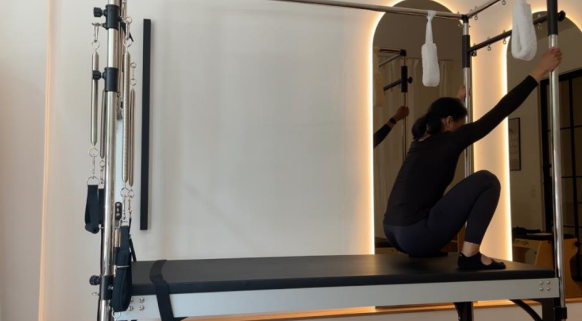
Purpose
The Stretch Squat encourages gentle mobility through the hips while allowing the pelvic
floor to lengthen. Using a wall, chair, or other stable support combined with relaxed
breathing provides a comfortable way to explore release and relaxation.
How
• Hold onto a stable support.
• Stand in wide parallel or toes pointed out.
• Lower into a comfortable squat.
• Stay in the position for 3–5 slow breaths.
• Press through the feet to return to standing.
Modification: If you have pelvic organ prolapse or your baby is in a breech position,
this exercise can be modified by lying on your back (on an incline) in a Happy Baby
position.
Everyday Movement
This movement can make activities such as getting down to the floor, gardening, or
playing with children more comfortable.
7. Active Squat
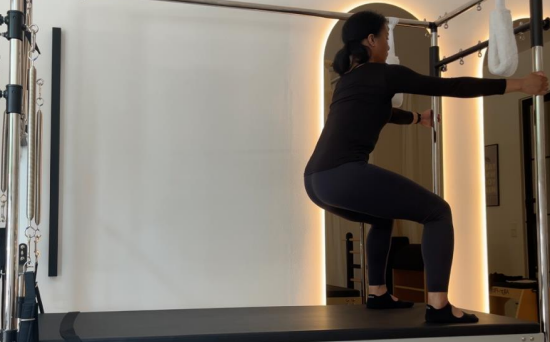
Purpose
The Active Squat strengthens the legs and glutes while practicing safe lifting mechanics
for everyday activities.
How
• Stand with your feet about hip-width apart.
• Toes facing forward or slightly turned out.
• Sit the hips back into a squat.
• Keep the chest lifted and feet grounded.
• Exhale as you press through your feet to return to standing.
• Repeat 8–10 repetitions.
Everyday Movement
Use this movement pattern when lifting laundry, groceries, or your child from the floor.
8. Star Pose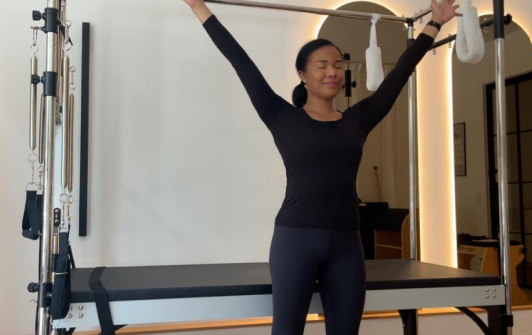
Purpose
Star Pose brings together the principles practiced throughout the session by
encouraging good posture, core support, and relaxed breathing. It is a great opportunity
to end your session feeling confident and grounded.
How
• Stand with feet comfortably apart.
• Feel equal weight through both feet.
• Reach the arms out to the sides.
• Lengthen through the crown of the head while relaxing the shoulders.
• Take 3–5 slow, comfortable breaths.
• Allow yourself to smile ☺
Everyday Movement
Return to this posture whenever you need a moment to pause, breathe, and reconnect
with your body.
Teacher's BIO: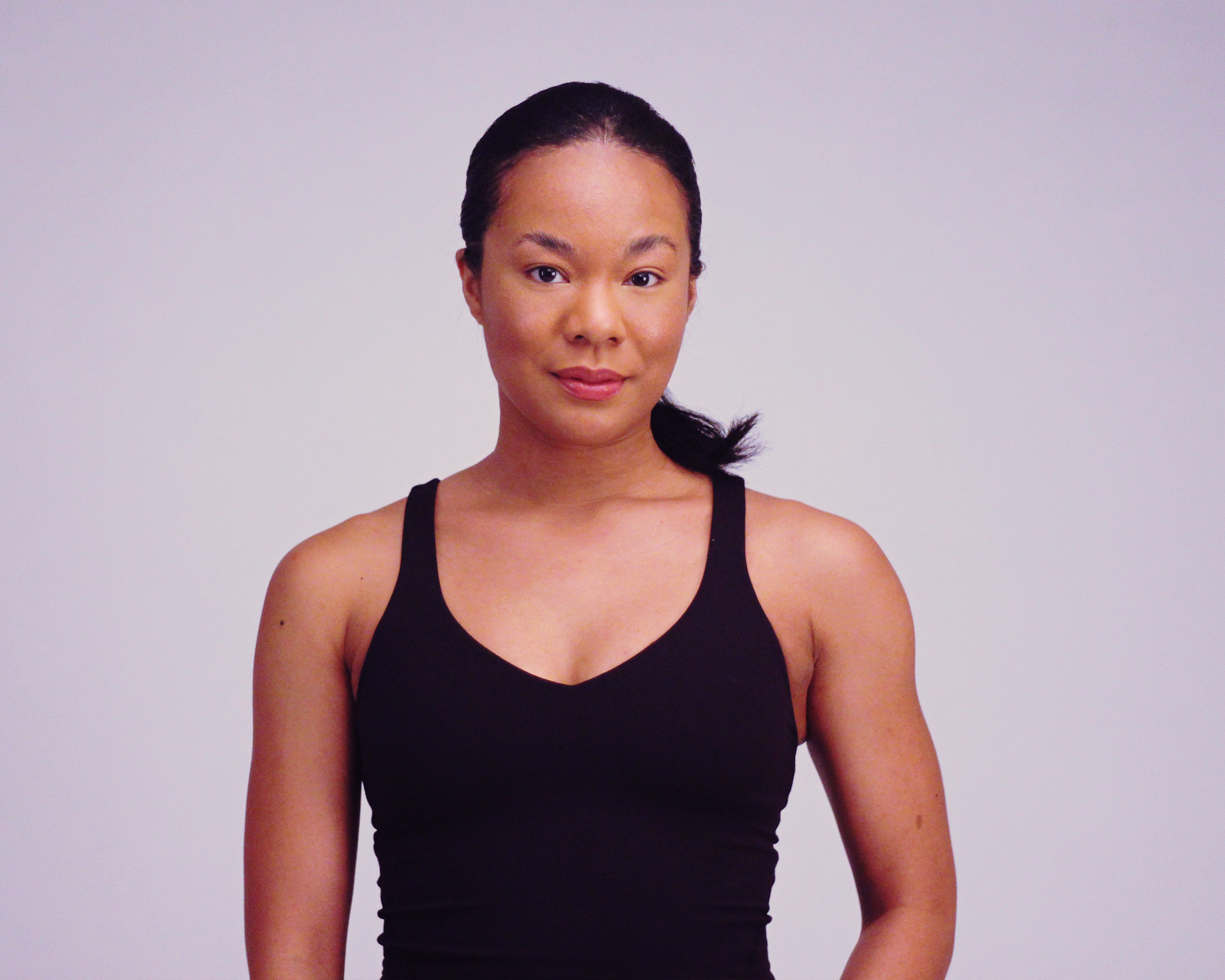
Lois Alexander is a Pilates teacher, dancer, and choreographer based in Berlin, Germany. She is passionate about helping people move with greater ease and confidence through Pilates. Her interests include nervous system regulation, dynamic breathing, functional movement, and supporting people in rediscovering new movement possibilities at every stage of life.
Instagram: @kinmovementbylois
Website: www.loislalexander.com
Email: [email protected]